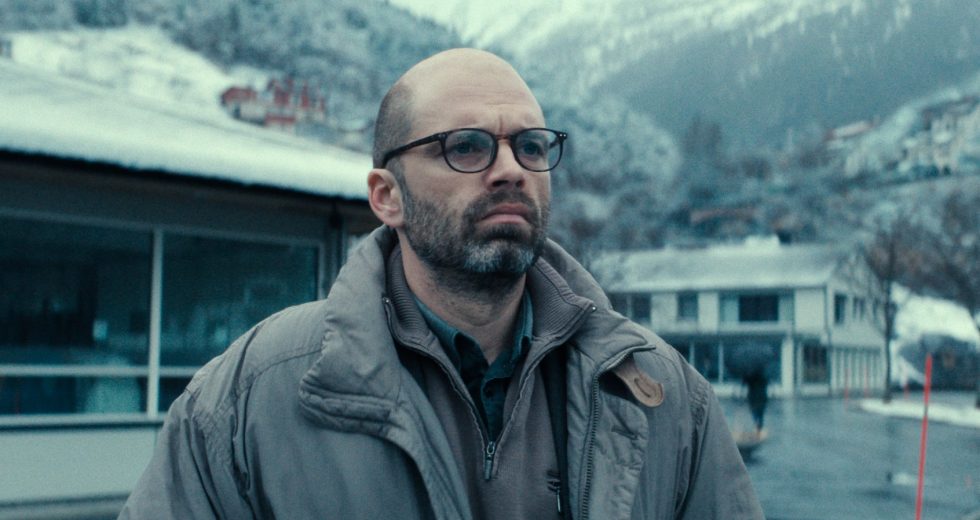
Few things in movies happen by coincidence, and fewer still in a film so self-conscious as Cristian Mungiu’s “Fjord.” The Romanian filmmaker’s stoic drama is designed to provoke viewers in opposite directions, snaring them in waiting traps and causing them to concede in agony, “You have a point!” Every aspect is meticulously studied and worried over, careful not to push the movie’s thorny narrative too far away from Mungiu’s bold central mission: artistic objectivity in one of the most impartial, biased and fundamentalist times in modern history. Experiencing “Fjord” is more like playing a puzzle game than watching a film — viewers will be better served if they remember specific details for later. The minutiae are the key to freeing oneself from Mungiu’s clever trap.
That’s also why, when “Fjord” opens with soft piano chords playing “Amazing Grace,” it’s safe to assume the song will be an integral motif throughout the film. Here, grace is doled out either liberally or not at all, restricted by governmental red tape and damning paperwork. As a concept, grace isn’t amazing so much as it is a clerical headache, made all the more complicated by the efforts of the Gheorghius, Mihai (Sebastian Stan) and Lisbet (Renate Reinsve), whose five children have been removed from their care by Norwegian child protection services. Despite their genial nature, the Gheorghius stick out like sore Evangelical thumbs when they immigrate from conservative Romania to Lisbet’s progressive Norwegian hometown. So when one of their children is found with bruises on her in school, the discovery sets off a chain of events in which the Gheorghius’ faith is tested, and their values persecuted.
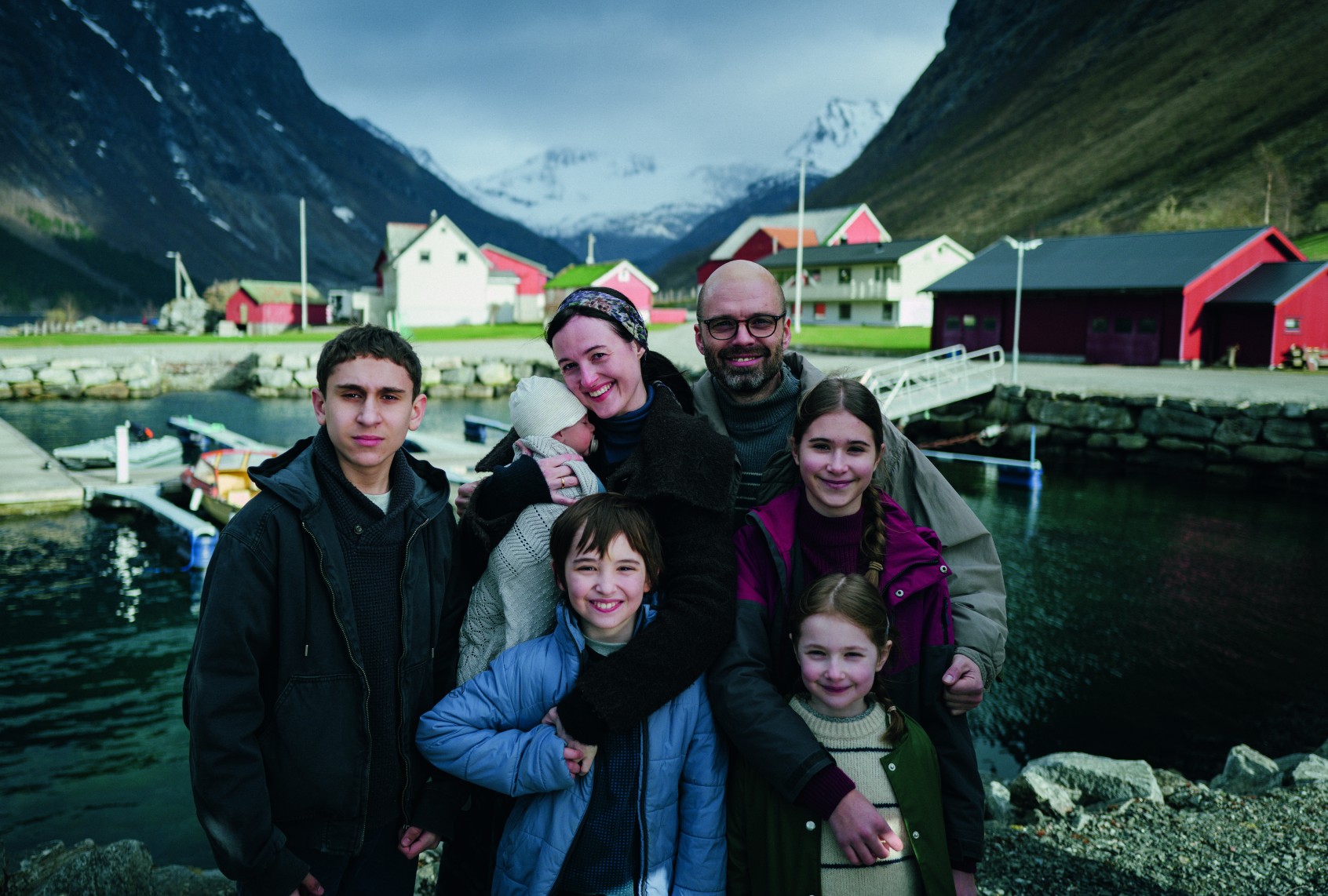
(Tudor Panduru/Neon) Jonathan Ciprian Breazu, Renate Reinsve, Filip Sebastian Barau, Sebastian Stan, Vanessa Cebam and Teodora Sabina Barau in “Fjord”
Though “Fjord” is an interesting film on its own, it’s an even more compelling experiment in how today’s over-explained world encourages people to watch movies: looking for the good and bad, right and wrong, protagonist and antagonist.
Or are they? In his biggest feature yet — aiming for Oscar contention after winning the coveted Palme d’Or at Cannes earlier this summer and screening at this year’s New York Film Festival — Mungiu repeatedly asks this question. Who is doing the most good when, ostensibly, everyone is trying to do the right thing, acting within their rights as parents or arms of the government? The answers aren’t at all simple, and Mungiu has no intention of making them so, much less revealing the whole truth behind the film’s central doubts.
Want more from culture than just the latest trend? The Swell highlights art made to last.
Sign up here
At times, this makes the humble viewer feel a bit like a guinea pig in a focus group; the audience’s reactions are integral to measuring the film’s success. Though “Fjord” is an interesting film on its own, it’s an even more compelling experiment in how today’s over-explained world encourages people to watch movies: looking for the good and bad, right and wrong, protagonist and antagonist.
The problem is that the world outside the cinema is far more complex than those binary ways of thinking allow. If films are a reflection of the world we live in, Mungiu’s film reflects a reality where objectivity is at risk of extinction. In “Fjord,” Mungiu tests neutrality’s limits when the stakes are at their highest. And while his impartiality occasionally and inevitably falters, the missteps show how difficult, and ultimately useless, it is to ignore humanity’s wide-ranging gray areas to make a beeline for black or white.
Inspired by the events surrounding Ruth and Marius Bodnariu — a devout Christian couple who, in 2015, were separated from their five children by Norwegian social services for seven months on a similar suspicion of mistreatment — “Fjord” quickly gets to the root of its conflict. The Bodnariu case drew international attention from Christian fundamentalist groups, who asserted that the conservative family was facing religious persecution by a liberal government. To the Christian right, the Bodnarius were examples of unchecked left-wing power and an attack on personal freedoms. To Norway’s child services group, the Barnevernet, the Bodnarius were a model of the progressive but necessary systems put in place to protect children. The truth, of course, lies somewhere in the middle, in the opaque unknown.
Enter Reinsve and Stan, an ideal pair of leads capable of providing the understated, baseline emotion that Mungiu requires to pull off an undertaking as tricky as “Fjord.” Neither Lisbet nor Mihai can exhibit too much passion or zealotry, too much unjust anger or warranted affection. They must, at all times, walk a very thin line to maintain just the right amount of clearheaded patience, lest Norwegian officials — or we, the audience — suspect that any truth is the absolute truth.
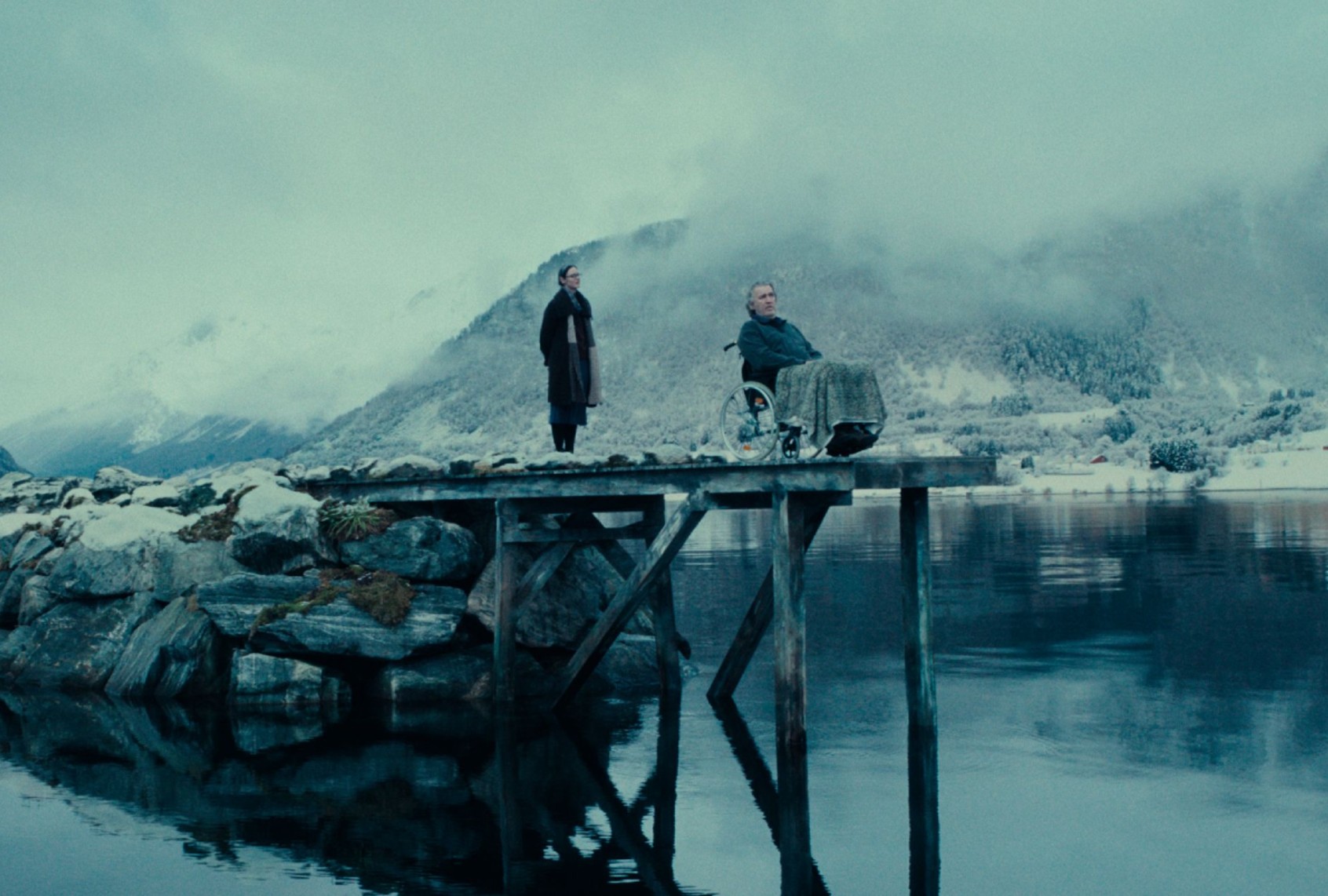
(Neon) Renate Reinsve and Øyvind Venstad Kjeksrud in “Fjord”
But “Fjord” is not a mystery. The overarching question shrouding the film is not, “Did they do it?” but rather, “So what if they did?” Mungiu presents information in a cold, straightforward fashion, asking the viewer to weigh Mihai’s admitted slap or two on the butt as corporeal punishment against the forever unknown extent of the family’s discipline and the government’s ensuing reaction. In the process, Mungiu naturally runs into roadblocks that he can’t pass, dogwhistles to conservative and religious leaders around the world who decry government interference. In a recent New York Magazine profile of Stan, Mungiu admits: “Because I don’t explicitly approve or condemn the positions that I bring to public debate, the supporters of these groups will always try to capitalize on that and claim this simple lack of firm judgment equals a ‘victory.’
If “Fjord” earns the awards attention it’s gunning for, I’d expect that the next months will be filled with debates over whether the film is conservative-leaning or ultimately progressive, all of which will be moot and useless. Mungiu’s intention is not to make the audience look more closely — quite the opposite.
That begs the question: How much responsibility does a filmmaker have to take a clear stance in their work, especially in a film that is overtly intended to be a lightning rod for heated debate? None, I’d argue — so long as that filmmaker can present either side of said debate with as much tact as the other. If objectivity is the initiative, then both viewpoints must have their advantages and follies fully rendered. It’s only fair!
As it turns out, equity is difficult to maintain in such an absurd age. Though he keeps a mostly steady balance, Mungiu depicts the Norwegian left as well-meaning progressive dopes a few too many times to remain truly objective. When child services representatives express their shock that the teenage Gheorghiu children don’t have internet access at home, can’t go on YouTube, and — gasp! — don’t have smartphones, their surprise blunts Mungiu’s sharp point.
“The people who have the power to rip children from their families believe that it’s in a child’s best interest to have a brainrot device,” these moments suggest with a wink. While these facets might depict our tech-obsessed age, Mungiu writes them in a way that makes the Norwegians look silly, and the Gheorghius look like objectively good parents. But, then again, maybe a critic who doesn’t want to shoot his phone would think differently. Such is the beauty of Mungiu’s observational, deceptively nuanced writing.
If “Fjord” indeed earns the awards attention it’s gunning for, I’d expect that the next months will be filled with debates over whether the film is conservative-leaning or ultimately progressive, all of which will be moot and useless. To deem a film whose worst mistake is some inherent goofiness as “insidious” defeats the entire point. Mungiu’s intention is not to make the audience look more closely — quite the opposite. His film takes a bird’s-eye approach to conflict, carefully studying how the systems set in place for our common good, on either side of the party or religious lines, can cause plenty of damage, too. If humanity doesn’t exist on a binary, perhaps the emphasis shouldn’t always be on trying to see eye to eye; otherwise, no one can take a clear look at what’s happening in the periphery.
“Fjord” screens from Sunday, October 4 at the New York Film Festival, with a wide theatrical release October 9.
Read more
about worthwhile films from the “Fjord” trio
Source link