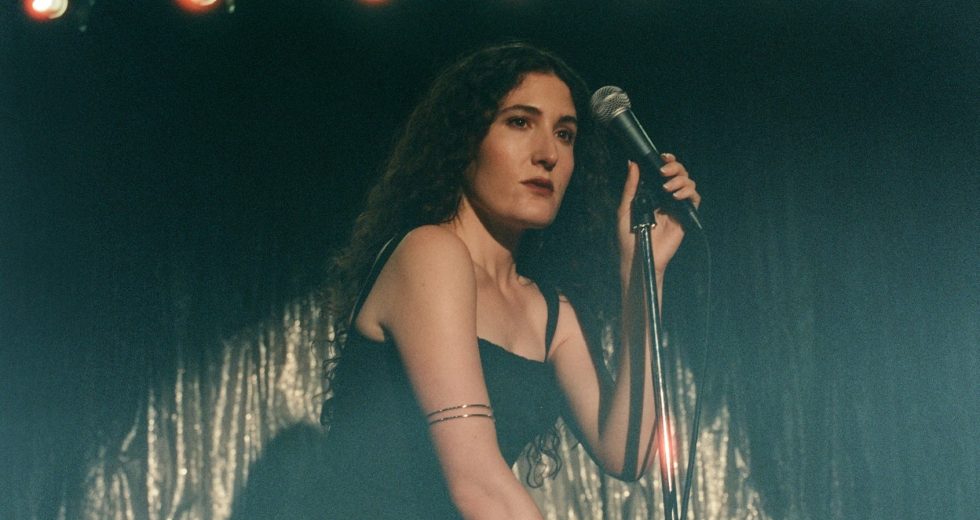
In a digital flyer promoting the stand-up shows that would culminate in her new HBO comedy special, “Parmesan,” comedian, actress and one of America’s greatest working artists, Kate Berlant, posed an important question: “HAVE YOU SEEN THIS CLOWN?” In one photo, Berlant, fresh from glam, seduces the camera; in the other, her face contorts into a rascally grin, eyes half-crossed for effect. No dichotomy better represents Berlant’s razor-sharp, thoroughly tasteful wit, which sits halfway between refined humorist and go-for-broke court jester.
If you haven’t seen this clown, there’s no better time than the present. Like most of Berlant’s work — from her extensive collaborations with best friend John Early to her unforgettable one-woman show, “KATE” — “Parmesan” is a masterful send-up of a time when we’re all doing character work. What begins as an honest account of modern life’s bleak state is distorted alongside Berlant’s malleable expressions, slowly blossoming into something life-affirming, like a diamond among the rubble. Some comedians like to say they give their audience a “night off” from the world. Berlant, on the other hand, relishes the chance to remind her audiences of just how blissfully hysterical the world can be.
Everyday life, in the Berlantian sense, is driven by affection for both the mundane and the surreal in equal measure. In the joke that inspires the special’s title, she measures an Instagram comment’s subzero value in a wide scope, lampooning the communal yet cartoonish nature of our endless scroll. Elsewhere, Berlant gets more personal than she ever has on stage, using the relatively recent discovery that she isn’t straight as the springboard for bits about how embracing queerness later in life can be as beautiful as it is uniquely mortifying.
But with Berlant, it’s not just about the jokes; it’s about the rhythm and physicality that accompany them. No one understands their audience better than she does, knowing comedy relies as much on observation as on good, old-fashioned slapstick. Berlant’s a tenured professor at the Make-‘Em-Laugh Institute, and “Parmesan” proves her research-driven thesis statement time and again: There’s no bad mood a good clown can’t improve.
Read more
about what’s good, bad and important in comedy
Source link