Perhaps it’s just hope springing eternal, but it seems that in the last week alone, there has been a significant step toward people finally understanding and accepting the incalculable toll of Israel’s war crimes and mass killing of Palestinian civilians in Gaza.
The progress has been twofold, courtesy of a one-two punch from the music and film industries: Robert Kraft Streisand-effected himself and Ed Sheeran in the wake of Macklemore’s support of Palestine. In the days that followed, Sheeran’s other opening acts dropped out of his tour, leaving his remaining dates in limbo and egg all over his face. Musicians and public figures followed, incentivized to stick their necks out for Palestine as a simultaneous middle finger to the average American businessman. Then, Israel threatened to strip “NAZA” co-directors Rachel Szor and Yuval Abraham of their citizenship — or worse — if they return to the country, implying that the contents of the documentary making waves in the film festival circuit are really as damning as early critics say.
Israeli military officers describe hacking into young girls’ phones and listening, waiting for them to exclaim with happiness that their father has returned. That moment, amid the pure and innocent joy of a child reunited with their parent after a long day, is when the airstrike happens.
Some might call that fate, others coincidence. Really, it’s the result of the tireless efforts by activists, journalists, aid workers and artists globally who have been desperately trying to direct the world’s attention to the human rights crises in Gaza for nearly three years. But no matter what you call it, it’s working.
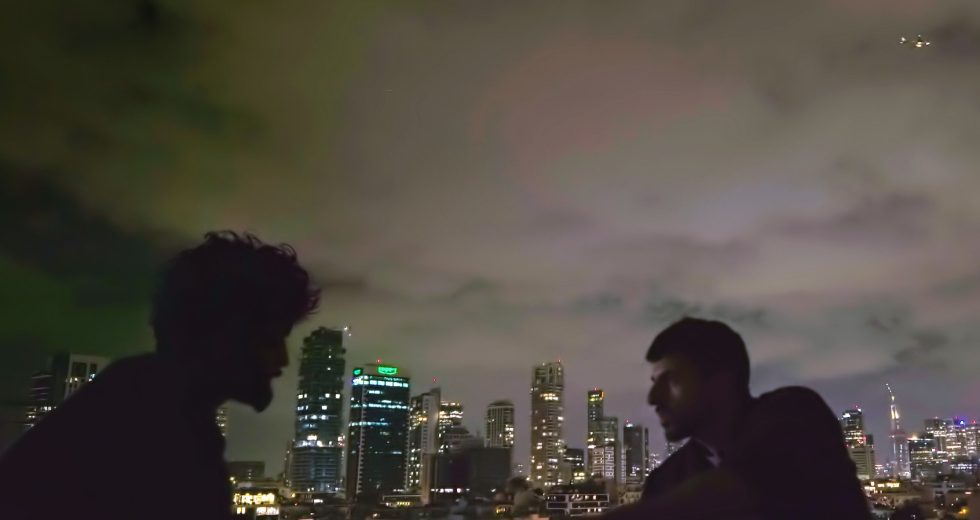
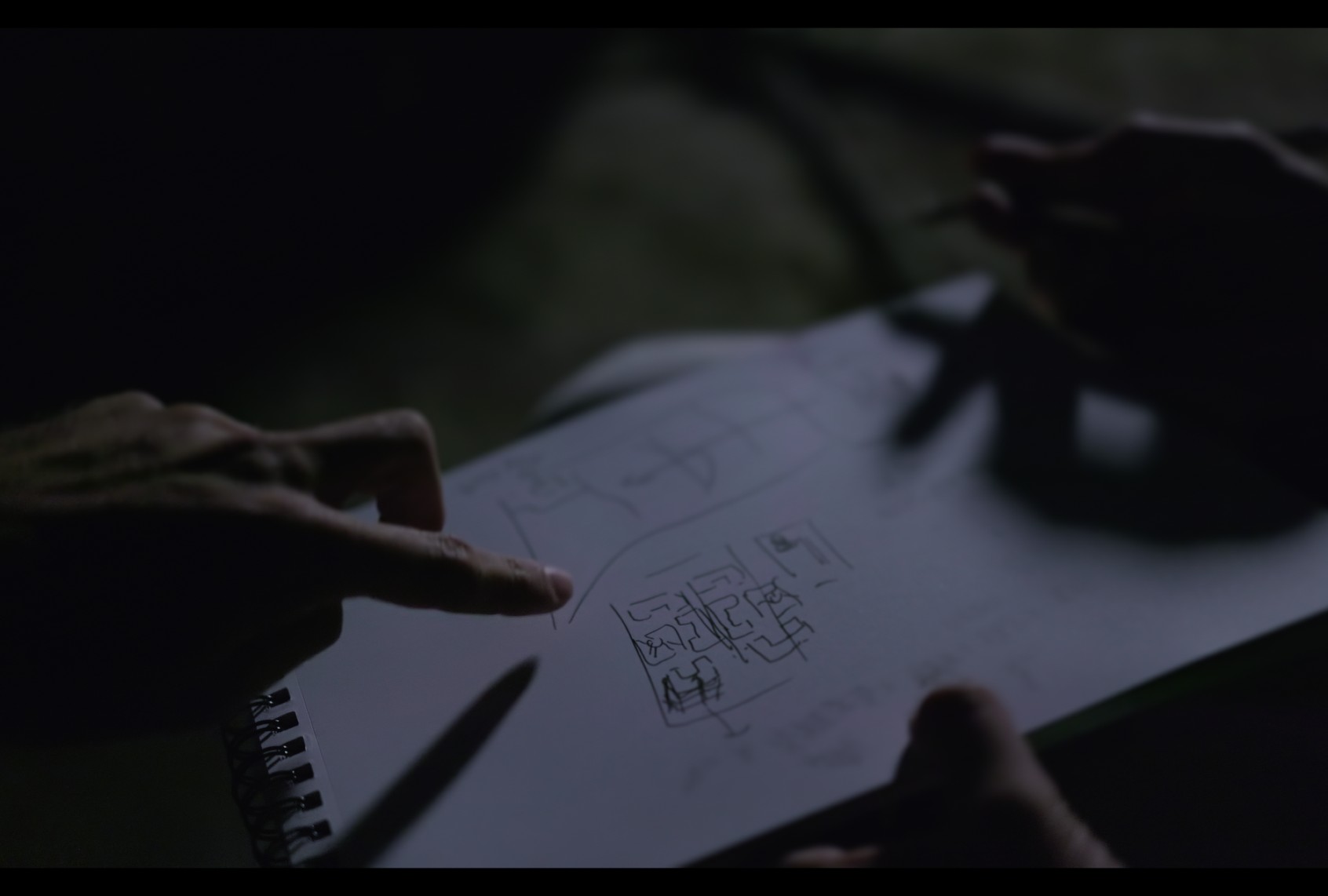
“Damning” is an understatement for the magnitude of the atrocities Szor and Abraham lay bare — ceaseless, calculated, and escalating crimes committed by the Israeli state. Throughout the film, which screens at this year’s New York Film Festival, Abraham interviews 24 different members of Israeli military intelligence about their day-to-day operations, learning the extent of the inhumanity running the show. Given Israel’s pattern of retaliation against dissenting voices, the interviews are filmed on the condition of anonymity, with voices digitally altered and conversations taking place under the cover of night on the rooftops in Tel Aviv.
(JW Films/The Guardian) “NAZA”
Naturally, this makes the film’s contents easier to refute for those who choose to deny the obvious. But the horrible and useful thing about the world today is that everyone has a camera. Palestinian suffering has been well and faithfully documented — including by Szor and Abraham, two of the four co-directors of the Oscar-winning 2024 documentary, “No Other Land.” But the most frequent and at-risk chroniclers of this critical point in history have been Palestinians displaced from Gaza and the West Bank, hoping to preserve the memory of their homes, lives and families, and hold the world’s attention without breaking its gaze. Now that their horrific plight coincides with Abraham and Szor’s second documentary, that goal stands to become a reality. But nothing will change if the world doesn’t listen up, harden their stomachs and stop pretending that the mass murders happening in Gaza, as “NAZA” so plainly puts it, are anything less than systematic.
Most pointedly, “NAZA” is titled for an Israeli military acronym referring to how many civilians will be killed in an airstrike. Throughout the film, officers rattle off numbers with all the nonchalance of times tables: 10, 15, 20, 25 NAZA, all expandable in Israel’s post-October 7 military escalation. While the state rattles off arguments about Hamas terrorists using human shields to avoid being killed, or going to great lengths to hide themselves, the officers interviewed report that the 75,000-plus Palestinians who have been killed in less than three years were considered disposable. The NAZA were no mere accidents, no casualties of war. They were tens of thousands of innocent people deemed complicit in the actions of a few, and therefore, their lives were of no value to Israeli military officials.
Even more frightening are the claims made about how this information is gathered. According to the interviewed personnel, the number of NAZA is determined by advanced, invasive surveillance — a combination of Gaza building codes that provide all the information needed about a structure’s inhabitants, and subcontracted AI programs that sort through data. The AI analyzes known Hamas agents’ phones for patterns in their cellular signals and compares them to hundreds of thousands of others in Gaza. If someone happens to live near a Hamas operative, or spends enough time in their general vicinity, the cell signal could very well lead the AI to determine that this person is also working for Hamas. The likelihood of that being true is slim, but that doesn’t matter when the mission is to kill anyone who might even tangentially, unknowingly associate with the organization.
At times, it feels difficult to compartmentalize it all at once. But that is also the film’s crucial challenge. “NAZA” asks its audience not only to withstand 77 straight minutes of horrifying information about the senseless deaths of Palestinian men, women and children, but to feel their spirit in every last syllable.
In an evocatively titled section of the film, “Daddy’s Home,” Israeli military officers describe hacking into young girls’ phones and listening, waiting for them to exclaim with happiness that their father — a person the Israeli military believes is tied to Hamas — has returned. That moment, amid the pure and innocent joy of a child reunited with their parent after a long day, is when the airstrike happens. To make sure they’ve accomplished their mission, Israeli officials keep listening, hearing the agonizing screams of mothers trying to save their daughters, and families begging for help and salvation. “It was like a video game,” one official tells Abraham.
This is merely the tip of the “NAZA” iceberg, and at times, it feels alarmingly and disappointingly difficult to compartmentalize it all at once. Not only do we learn swaths of dreadful, unforgettable information — much of which, the film notes, was previously published in the Guardian, Local Call and +972 magazine to little global reaction — but we come to understand AI warfare is not a threat, but a reality. It’s, admittedly, a lot to take in.
Want more from culture than just the latest trend? The Swell highlights art made to last.
Sign up here
But that is also the film’s crucial challenge. “NAZA” asks its audience not only to withstand 77 straight minutes of horrifying information about the senseless deaths of Palestinian men, women and children, but to feel their spirit in every last syllable, and hold onto it when we go. We’re tasked with gauging our relative comfort with how much the world has changed in the three years since October 7, and how much bleaker things have become. Ignorance hasn’t done jack sh*t, and hasn’t made anybody’s lives any better. To continue to turn the other cheek now isn’t convenience; it’s cowardice, just as it always has been. That it’s taken this long to reach what could be a watershed moment speaks volumes about how every passing day furthers humanity’s desensitization.
In the film, Abraham asks one of the Israeli military officers if he thinks that these systematic murders — carried out knowingly alongside efforts to turn Gaza to rubble and deprive Palestinians of shelter, food, water, housing and basic safety — constitute a genocide. “Yes, absolutely,” they reply. In the background, residents of Tel Aviv go about their daily lives mere miles from the catastrophic anguish in Gaza. Here, Szor and Abraham quietly demonstrate the lengths and risks of their allyship, pitting their relatively comfortable upbringing in Israel against their fervent quest to unlearn a propagandistic way of living. Their lens finds people walking on their treadmills, talking on the phone, laughing with one another. Families gather; special moments are cherished. But these sights are drained of their warmth, depicted with a cold, eerie hum that, when it bleeds into the roar of suffering miles away, becomes a deafening cacophony.
But one doesn’t have to be near the desert to hear the dissonance. The sound is here, too. It’s right next to you, wherever you are, if you only listen for it. Those who have tried to tune out the blaring pandemonium — to ignore the cruel, senseless violence enacted upon a Palestine that deserves peace — won’t be able to stave it off much longer. It seems that much of the Western world is waking up, roused by that sonorous noise that they just can’t seem to shake. And with a newly announced, calculated theatrical rollout to “bring ‘NAZA’ to audiences as quickly as possible,” there is, at long last, a real chance that this wave is still rising, and won’t reach its crest. To quote some very succinct words from Macklemore, something I never believed I’d do but am very fortunate to be able to: “When the news cycle moves on, which it will, don’t move with it.”
Read more
about the power of a great documentary
Source link