Elizabeth Warren’s job doesn’t need to be this hard.
The Democratic senator from Massachusetts is leading a cadre of largely left-of-center lawmakers in reviving the Stop Wall Street Looting Act, legislation that would curtail the worst tendencies of private equity firms. These investment firms frequently buy struggling companies in leveraged buyouts, foisting the debt of the purchase back onto the business being bought. The firms downsize staff and sell off parts of the purchased company to create dividends, all while charging the purchased corporation management fees for their trouble. When the companies frequently fail to service all this new debt, they are forced into bankruptcies that allow the private equity ownership group to walk away.
Warren has been fighting for a while to hold private equity firms responsible for the well-being of the companies they own. In fact, this is her third attempt at pushing the legislation, which she first introduced in 2019. The act would close loopholes that shield these investment companies from the debts of the newspapers, hospitals and department stores they purchase, and would also limit the amount that could be extracted from a private equity-owned company.
“Private equity takeovers are legal looting that make a handful of Wall Street executives very rich while costing thousands of people their jobs, putting valuable companies out of business, and in the case of health care, is literally a matter of life and death,” Warren said in a statement of an earlier version of the bill.
Facing one of the most money-friendly presidencies in history and Republican control of the White House and Congress, the bill starts to look like a hard sell. Add in the public’s aversion to barring businesses from doing anything, along with the fond feelings many Americans have for the words “private” and “equity,” and it’s easy to feel hopeless.
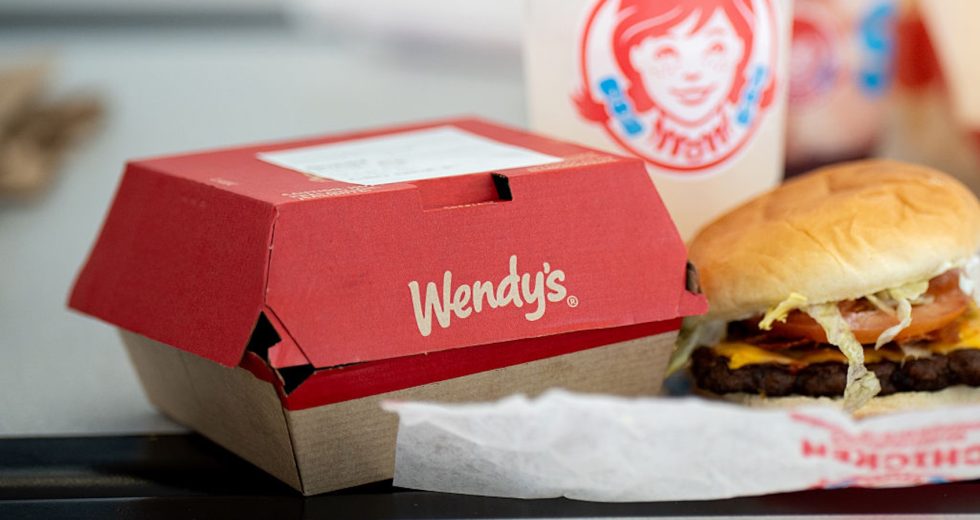
But there is a way to shape public opinion on this issue: Warren and her allies in Congress could simply point Americans toward an iconic redhead with pigtails. In recent years, Wendy’s has taken heat for an alleged decline in food quality. The flood of negative reviews of the fast-food chain, coupled with widespread closures of its restaurants, led Slate to ask in April “What the Hell Happened to Wendy’s?”
Citizens who aren’t likely to notice when their local newspaper becomes a bit more bare-bones, or that the already byzantine healthcare system becomes slightly harder to navigate, will definitely notice when their lunch gets worse.
The logic behind connecting fast food to private equity takeovers is straightforward. Citizens who aren’t likely to notice when their local newspaper becomes a bit more bare-bones, or that the already byzantine healthcare system becomes slightly harder to navigate, will definitely notice when their lunch gets worse — and could well inspire widespread pushback against murky financial operators.
At least that’s what Stavros Halkias believes. The comedian and actor who made his name on an unprintable dirtbag-left-adjacent podcast made the case for tying private equity to bad sandwiches during a recent interview with sports journalist Pablo Torre.
“I think it’s clear that what’s f**king us up is private equity . . . taking over products that are awesome,” he said. “The one that I’ve actually latched onto recently . . . is fast food.”
Halkias pointed to the fast food chain’s recent adoption of shredded lettuce on its chicken sandwiches as a cost-slashing maneuver typical of private equity-owned restaurants.
“Everybody understands that Wendy’s has gotten s**ttier,” he said. “The spicy chicken sandwich now uses shredded lettuce. Right there, that is private equity. That is someone saying ‘We don’t want a fresh head of lettuce that costs more money. So, we’re going to give you bagged sh**ty lettuce. I know in the grand scheme of things it’s not a big deal, but people will notice.”
Want more sharp takes on politics? Sign up for our free newsletter, Standing Room Only, written by Amanda Marcotte, now also a weekly show on YouTube or wherever you get your podcasts.
Wendy’s is not fully owned by a private equity fund, but Trian Fund Management and its CEO, Nelson Peltz, own nearly a quarter of the chain restaurant’s stock. Peltz has launched multiple bids to take over the chain, most recently in February and August, before deciding he would wait to see if Wendy’s newest CEO, Bob Wright, could turn the flagging operation around. Still, with a buyout looming over the company’s head and its largest investor grumbling, it’s hard to see cost-cutting measures as entirely free from the influence of private equity firms.
Another fast-food chain, Jersey Mike’s, offers a more straightforward example. After the sandwich company was purchased by Blackstone in January 2025, customer complaints about declining quality and rising prices have dogged it ever since.
“Some f**khead who’s never spread mayo in his life decided instead of a sandwich this is now a commodity,” Halkias said. “By turning the consumer experience shittier, some d**khead who’s never made a sandwich gets a billion extra dollars.”
Halkias sees fast food and professional sports as the two arenas most likely to turn opinion against private equity and investment firms more generally. “I do think if one of these billionaires ruins a franchise, you might have goombah football fans reading Karl Marx,” he said. “If they destroy the Lakers, guys with Kobe back tattoos are going to start the proletariat revolution. I think that the closest we’re getting to class consciousness is fast food and sports teams.”
Halkias gets paid to be funny, and his stand-up career was boosted by a YouTube algorithm that appreciated his talent for crowd work. While Warren and the bill’s co-sponsors shouldn’t lean too hard on an extemporaneous riff from a podcaster, the germ of a promising strategy is there.
Private equity is abstract by design; the role of these firms is hard to figure for anyone outside of the C-suite. To draw the line between funds with boring names and the everyday services that have been eviscerated by bean-counters, Warren and the supporters of the Stop Wall Street Looting Act will first have to first meet people where they are. And where they are is eating lunch in their cars.
Read more
about private equity
Source link