Of all the ludicrous things written about Sofia Coppola’s beguiling “Marie Antoinette” upon its theatrical release 20 years ago (and after being booed at its Cannes premiere, there were so frighteningly many), the most absurd is the hand-wringing over its anachronistic soundtrack. Coppola filled the film tip-to-couture-heeled-toe with songs from ’80s punk and new wave groups, creating a throughline between her own teenage preoccupations and the adolescent Queen of France’s frivolities.
Looking back now, the decision is even more inspired than it was then: a bold, personal choice that helped Coppola’s film stand out from the otherwise stuffy welcome it was bound to receive. This was not, after all, your conventional period piece. Coppola was granted unprecedented access to film in and around the grounds of the Palace of Versailles. But beyond the exclusive entrée, Coppola — only on her third feature, but already known for her affinity for youth culture — would bring Marie Antoinette a jouissance the history books had never afforded her.
One gets the sense that filming the production of “Marie Antoinette” is Eleanor Coppola’s version of a parent at their child’s Christmas pageant, ducking down in the aisles and contorting themselves to ensure they don’t miss a single moment. It’s the perfect example of how movies can make something as intangible as love go on forever.
Critics, of course, didn’t see it that way. Writing about the soundtrack, The Denver Post’s Michael Booth said the music was “not interesting enough to save this bauble,” and that Coppola “doesn’t even have the conviction to remain new wave throughout.” Time Out’s Dave Calhoun professed: “The soundtrack — like the distracting cakes, costumes and production design — does everything to stress youthful decadence and nothing to throw any light on the woman who gives the film its name.” Most curtly, The San Francisco Chronicle’s Mick LaSalle wrote that Coppola’s “reductive approach illuminates nothing about the queen except to suggest that she was an idiot, and portentous shots of her rushing down opulent corridors to a rock soundtrack can’t lend her stature.”
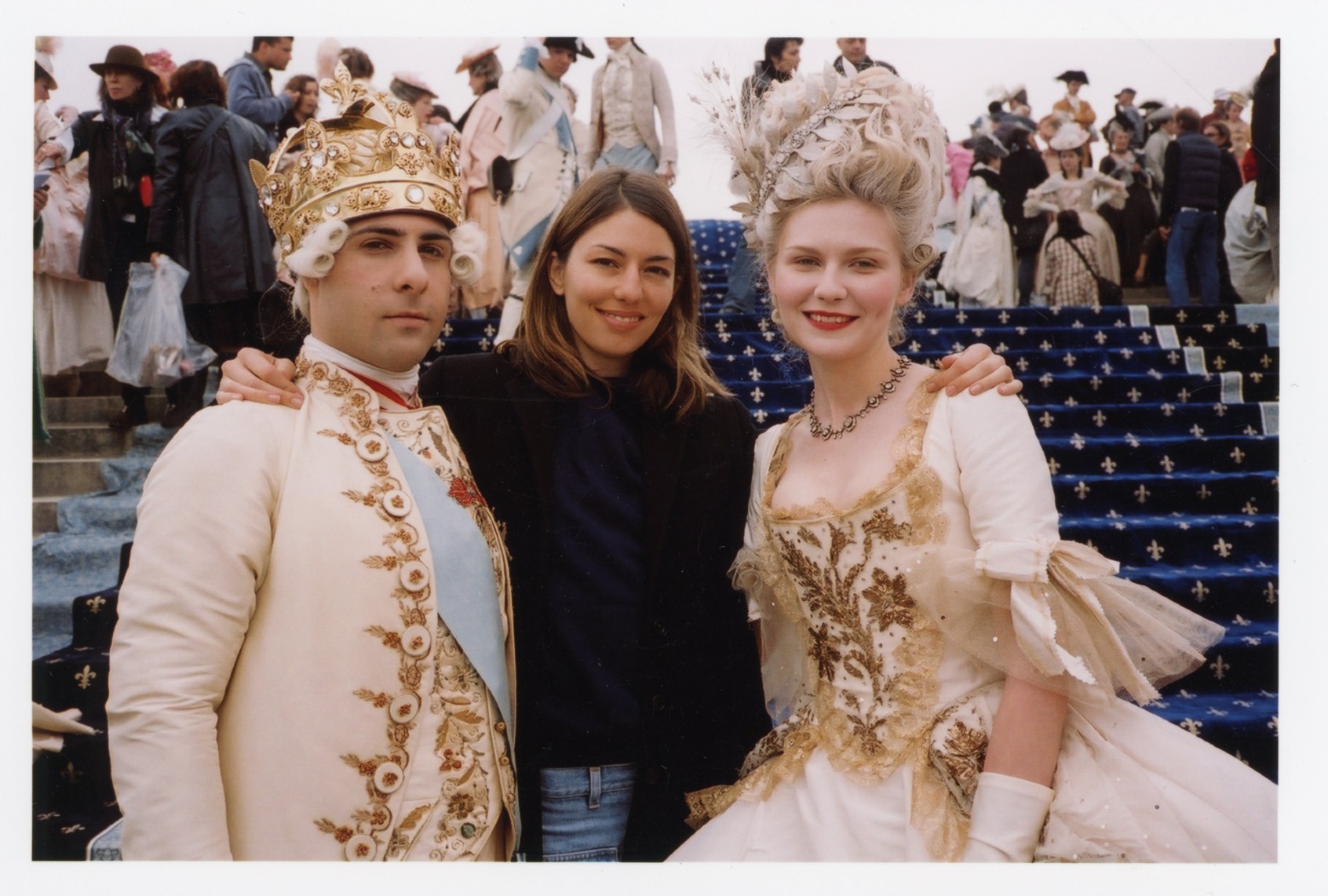
(Sofia Coppola) Jason Schwartzman, Sofia Coppola and Kirsten Dunst on the set of “Marie Antoinette”
What’s funny, especially in retrospect, is how widely these men whiffed the point. Historical stature and new discoveries are irrelevant. (So, too, is mature conviction — though I’d argue Coppola displayed exactly that when she didn’t make the entire soundtrack new wave.) Coppola conveys that the answers about who Marie Antoinette was have been written into history, but overlooked by the men who most often dictate it. She was a teenage girl suddenly saddled with the fate of a country, tasked with making decisions well beyond her purview or experience. Marie Antoinette was out of her depth from the moment she set foot in France from Austria, entrusted with overseeing war and peace, money and poverty. She tried her best, did what she felt was right, and they had her head for it. What better analogy for Coppola and the bitter response to her brilliant, evergreen third film?
Want more from culture than just the latest trend? The Swell highlights art made to last.
Sign up here
Twenty years on, “Making Marie Antoinette” — which screened at this year’s New York Film Festival and premieres in theaters October 23 before streaming on MUBI November 6 — sheds ravishing new light on Coppola’s masterpiece. Co-directed by Coppola alongside her late mother, Eleanor, and drawn from over 90 hours of behind-the-scenes footage Eleanor shot during production, the documentary is an instant essential for anyone ravished by the original film or the filmmaking process.
Up-close and personal, Eleanor’s camera reveals the massive undertaking of producing a movie at this scale, honing in on small, intricate details to convey her daughter’s meticulousness. Her footage is teeming with maternal pride, observant and heartwarming. One gets the sense that, for a filmmaking dynasty like the Coppolas, filming the production of “Marie Antoinette” is Eleanor’s version of a parent at their child’s Christmas pageant, ducking down in the aisles and contorting themselves to ensure they don’t miss a single moment. If “Marie Antoinette” says as much about its director as it does about its subject, “Making Marie Antoinette” is the perfect companion piece: A film about letting art and life stay in constant conversation, and how that dialogue makes for a rich existence. It’s the perfect example of how movies can make something as intangible as love go on forever.
Sofia and Eleanor Coppola began work on “Making Marie Antoinette” together during the pandemic. Locked away in their quarantine pod, the isolation proved the perfect opportunity to comb through hours of archival footage, stitching a story from B-roll and memories, both of which Eleanor had plenty of. A dedicated archivist of her own life via journals and film, Eleanor spent much of her time trailing her husband, Francis Ford Coppola, and children between their movie sets to document the arduous filmmaking process. She eventually broke into her own work beyond documentaries and videography, directing two narrative feature films before the pandemic began. At her daughter’s side, “Making Marie Antoinette” made progress but remained unfinished when Eleanor died in 2024. Sofia decided to finish the film as a tribute to her mother, and both women’s touch can be felt throughout — two hands held together, always.
Even those critics who panned “Marie Antoinette” 20 years ago could find something to adore here. For all the derision heaped upon Sofia’s keen directorial eye and scrupulous vision, a behind-the-scenes look only makes the details all the more impressive. It’s a production with a capital “P”: hundreds of extras, an immense principal cast, throngs of below-the-line team — costumers, production designers, historical advisors, translators — and one giant, very expensive castle that must be handled with the utmost care. One doesn’t have to hear Sofia say “this is a lot” to understand that it’s far more than just a lot. It’s visible in every shot. For a director whose previous two films were microscopic in comparison, shooting “Marie Antoinette” may as well have been going to the moon.
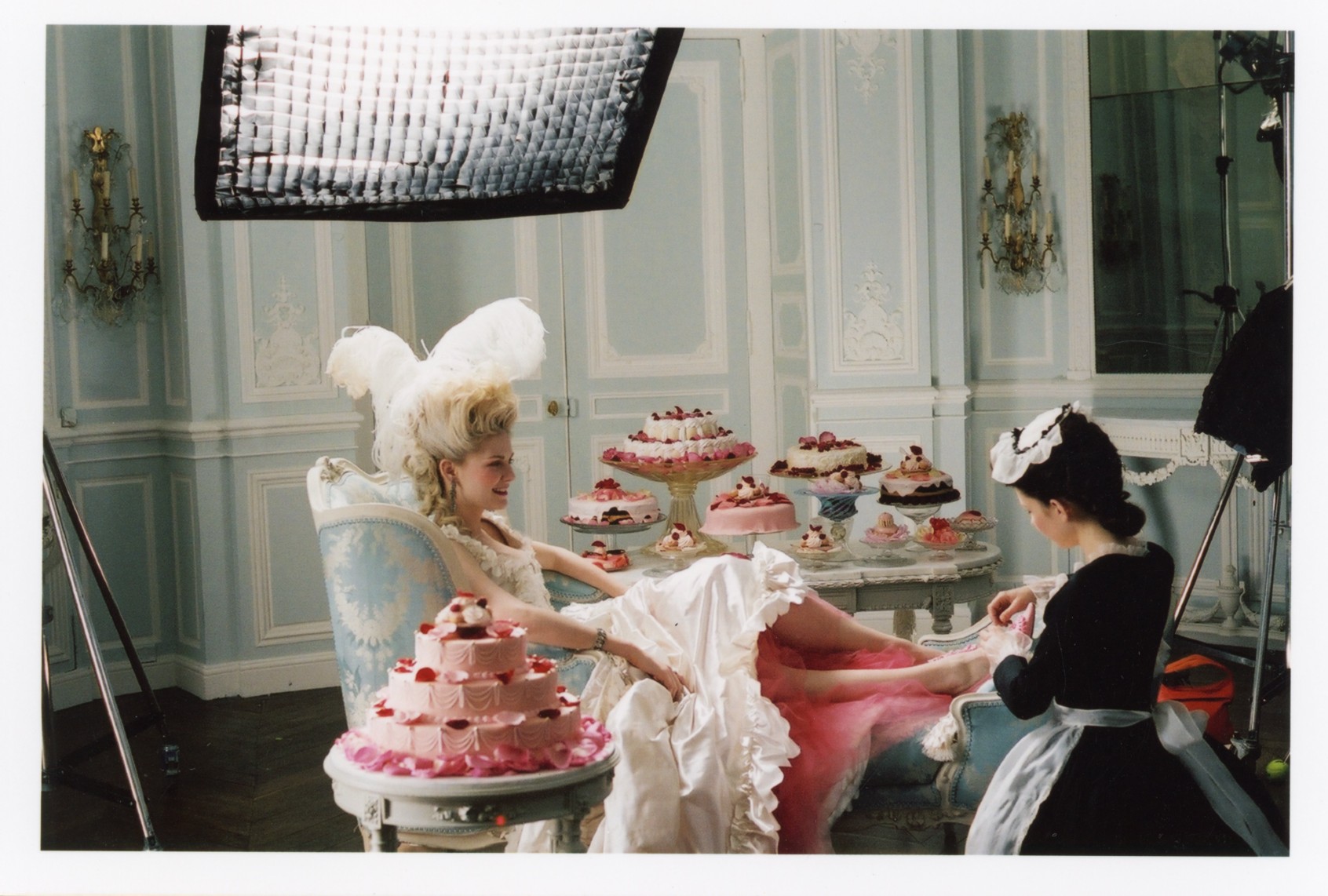
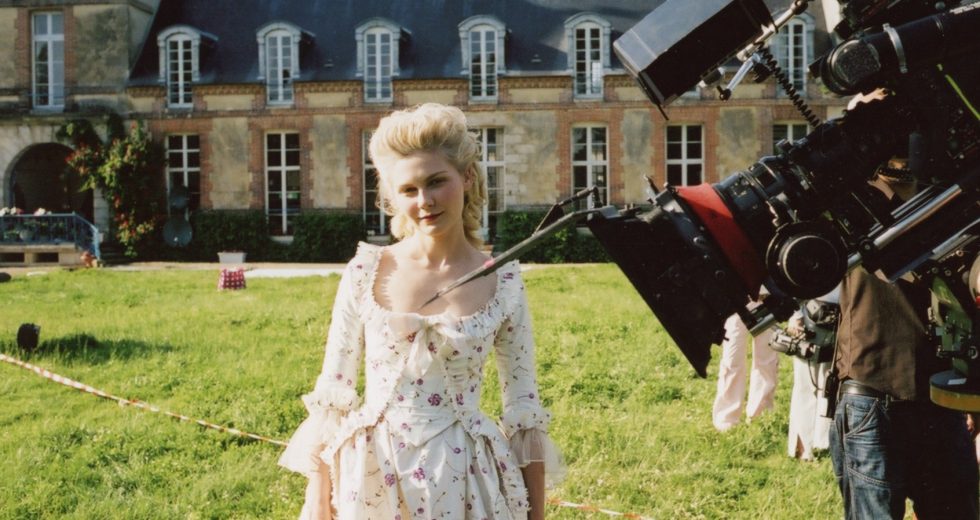
(Sofia Coppola) Kirsten Dunst on the set of “Marie Antoinette”
But that’s also what makes it such a feast. It’s a film unlike any other period piece, as sumptuous as decadent as a French pastry. One can practically taste the butter on their lips as Kirsten Dunst glides through ornate halls and indulges in raspberry-topped sweets. This surplus of opulence is what gives the film its edge, too. Think about who you were at 14. If you were thrust into a world where everything you could ever want is at your fingertips, where love blossomed as freely as the gardens adorning your magnificent estate, wouldn’t you, too, lose yourself inside the pomp and circumstance? Is that not the very feeling of being a teenager, so certain that everything and anything is possible, that when one gets a taste of the world, it’s nothing short of intoxicating?
As the long, 50-some-day production schedule rolls on, the viewer can feel Eleanor’s anxiety ease, allowing pride to take full control. Sofia has this, and Eleanor’s job might be the best one on set: watching the daughter she raised come into her own.
For Sofia, the fantasy is the film. It’s integral to Marie Antoinette’s tragedy, to making the viewer empathize with a girl who had no choice but to get in over her head. In Eleanor’s camera, Sofia has that same impish desire, taking on a film so gargantuan that she can’t possibly understand that her eyes are bigger than her stomach. Eleanor watches dutifully, admiring her daughter as she leads rooms full of men, asserting that her decision is not only the best one, but the right one, because she is the person in charge.
It’s frightening to watch someone you care for so deeply balance all that power. But through journal entries from that time, narrated in the film by Diane Lane, the audience can piece together where the fear and the pride meet. After all, Eleanor understood from decades of experience that filmmaking is, most often, a boy’s club — even when a woman is at the helm. And as the long, 50-some-day production schedule rolls on, the viewer can feel Eleanor’s anxiety ease, allowing pride to take full control. Sofia has this, and Eleanor’s job might be the best one on set: watching the daughter she raised come into her own.
“Maybe making movies is a way of moving back and forth, in and out, of linear time,” Eleanor says in one of her journal entries. It’s a reference not only to the period production, but to her daughter’s thoughtful directorial anachronisms, the very decisions that would make “Marie Antoinette” last for 20 years and beyond. What a glorious, warm and strangely pertinent observation — something Eleanor couldn’t have understood the relevance of at the time. Here we are, two decades on, watching her documentary further cement Sofia’s film as the modern classic it is. More than a meta perspective or conventional behind-the-scenes doc, “Making Marie Antoinette” is a tender portrait of familial love from mother and daughter alike. Now, the pride moves in both directions — with Sofia as reverent of her mother’s work as Eleanor was of hers — meeting in the middle to stretch into the future.
Read more
about riveting stories of family bonds
Source link