It’s a $16 disappointment every time.
These days, the airport sandwich tends to emerge from a fluorescent-lit vending machine with a name like Farmer On-the-Go or Nutrition Inc. The machine is usually white, decorated with soothing green or blue iconography meant, I suppose, to conjure grass and sea in one of the least pastoral spaces on earth. Through its glass door, you can survey the foods generally understood to be “healthy,” at least compared with the Panda Express and Cinnabon farther down the concourse: yogurt parfaits with thin geological strata of berries; Caesar and chef salads in plastic clamshells; a few juices and smoothies; wraps, usually Caesar; and sandwiches, almost invariably ham or turkey.
The last time I bought one, I was flying from Louisville to Chicago. It was early, and I was travel-day queasy enough that whatever Smashburger considered a breakfast sandwich seemed unwise. A turkey sandwich and a pack of mint gum appeared to be the more prudent option.
I accepted the disappointment the moment I tapped my debit card: this was not a $16 sandwich.
It came in a rigid plastic triangle sealed with peel-and-stick film—a transparent reliquary for something nobody revered. Condensation had gathered beneath the lid, suggesting freshness, or at least recent contact with the natural world, but when I peeled it back there was a suspicious lack of smell.
The bread was stale. One piece of lettuce was limp; another was somehow entirely lettuce rib. The turkey was fine, and the cheese was technically cheese, though the sandwich had achieved the improbable condition of being simultaneously refrigerator-cold and slightly melted. There were packets of Hellmann’s mayonnaise and mustard at the counter, which helped, but only so much.
This felt particularly insulting because I really, really love sandwiches—not merely as lunch, but as a form. Watching “Scooby-Doo” as a child, I came away with two clear ambitions for adulthood: a side gig solving mysteries and a refrigerator always full of sandwich ingredients. The towering versions assembled by Shaggy and Scooby embodied abundance, customization and the exhilarating possibility that nearly anything could be made better by placing it between two pieces of bread.
The airport sandwich represents the betrayal of that promise. It has presumably been engineered by a team, calibrated for refrigeration and focus-grouped into broad acceptability, yet it feels made by no one. Its chief ambition is endurance: it must survive transit, uncertain demand and an unknowable stretch between gates. Endurance is the full extent of its imagination.
Want more great food writing and recipes? Sign up for Salon’s free food newsletter, The Bite.
Its true opposite is not the restaurant sandwich, constructed by a chef and eaten promptly under ideal conditions.
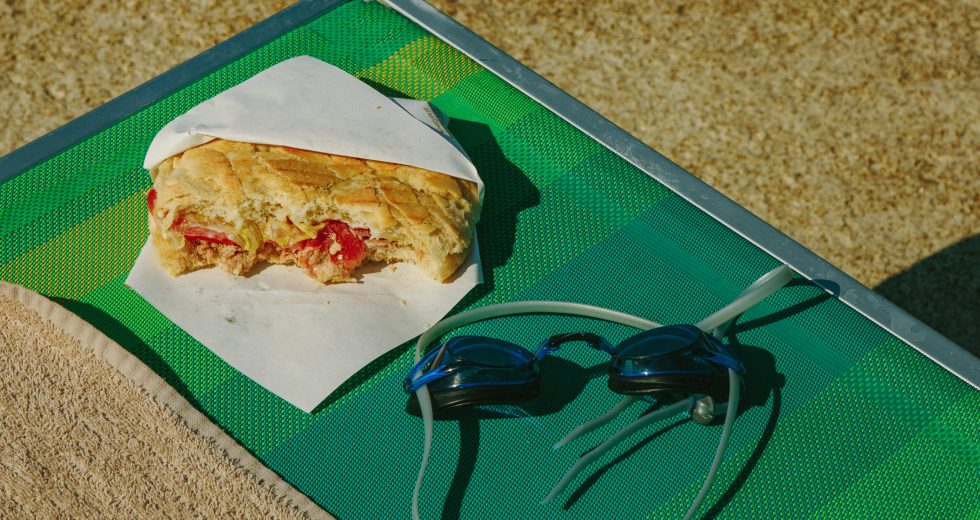
It is the beach sandwich: made by everyday people with a zest for life and brine, then carried some distance before being eaten with an appetite sharpened by sun, swimming and the lugging of chairs across hot sand.
Building one brings out the latent chef in nearly everyone. Italian-American shore moms know this. So do dads carrying old-school Igloo coolers, each of whom, I suspect, has strongly held beliefs about bread density, condiment placement and whether tomatoes are worth the risk. These people may never use the phrase “moisture barrier,” but they know where the cheese belongs.
A good beach sandwich is designed not merely to survive the wait but to improve during it. The bread grows slightly more tender. The cheese softens. The sauces settle into the meat and greens. It becomes a little compressed, a little messier and somehow more itself.
Though the Scooby-Doo towers would never make it across the dunes, there are better ways to build a sandwich for adventure. Let me show you.
The beach sandwich blueprint
Bread is the first and last defense against sogginess, which is why sturdy loaves — focaccia, baguettes, bâtards, Italian bread — shine in beach-sandwich applications. They can take a generous smear of sauce, withstand several hours of compression and still emerge recognizably bread-shaped.
For this sandwich, I wanted ciabatta because it is perhaps the most pillowy of the sturdy breads. It has enough backbone for the journey without requiring the determined chewing that makes lunch feel like a mandibular endurance event. Its open crumb absorbs just enough sauce to become more flavorful as it sits, while the soft crust remains easy to eat on a towel without showering your lap in shards.
Next come the condiments. I am an avowed condiment hound, especially when two sauces are doing different jobs. Double sauce is not necessary, but I like a little indulgence underscoring the practicality of a packable meal.
On one side goes lemon mayonnaise, our acid-fat lever: rich enough to keep the turkey lush, sharp enough to wake it up. On the other goes a coarse, olive-bar-inspired romesco made with jarred roasted peppers, sun-dried tomatoes, salted roasted almonds and smoked paprika. It brings vegetal sweetness, salt, smoke and nubby creaminess without requiring anyone to roast and peel peppers before packing the cooler. Marcona almonds are lovely if you want an amusing high-low dialogue with the potato chips that appear later, though any salted roasted almond will do.
I initially considered Manchego. Its saltiness and nuttiness made perfect sense with the romesco, but I realized I wanted foldiness rather than crystalline hunks. Muenster is less assertive but more accommodating: its mild butteriness stands beside the sauce without competing, and it softens agreeably in summer warmth without becoming stringy or oily. The best beach-sandwich ingredients have promising future states.
Then there is the turkey.
Like all good beach sandwiches, some of this comes down to pure personal desire. I could eat a turkey sandwich every day of my life. I maintain a running ranking of the best ones in Chicago, from the version at my local bánh mì counter—resplendent with pickled daikon and carrots, Vietnamese mayonnaise and soy sauce—to the one at my neighborhood café, served on crackly oat bread and actually worth its fifteen-dollar price tag.
I considered prosciutto, roast beef, cured meats and even a pickle-heavy chickpea salad. All would have worked. But good sandwich architecture is not the same thing as bloodless optimization. At some point, desire gets veto power.
Turkey, baby.
For greens, I turn to arugula. Crisp-head lettuces have their place — I love them on summer sandwiches destined to be eaten immediately — but given enough time, crunch becomes limpness.
Arugula knows how to wilt gracefully. Its peppery bite survives the wait, while the leaves soften into the sauces rather than collapsing into wet ribbons. It also lends the sandwich the air of something procured from a real cute deli, perhaps one with handwritten menu boards and expensive sparkling water.
Finally, the salt-and-vinegar chips go inside.
This is partly whimsy, but also practicality. Their crunch interrupts the softness of the turkey, cheese and sauces; their salt seasons the sandwich; and their pucker sharpens the lemon mayo and smoky-sweet romesco. Tucked against the arugula, they function almost like an extremely unserious vinaigrette.
They will soften somewhat as the sandwich waits, but not entirely. That slightly crushed, partially melded state is the point. A good beach sandwich should not remain frozen in the moment of assembly. It should settle into itself.
How you wrap it matters, too. I prefer parchment paper for the first layer, which allows the bread to breathe and avoids recreating the clammy condensation routine of the airport sandwich. Wrap it snugly enough to hold everything together and encourage a little beneficial compression.
If it is headed into a cooler, place the parchment-wrapped sandwich inside a resealable bag or hard-sided container. The inner layer remains breathable; the outer one protects it from the ice pack and the inevitable little lake at the bottom of the cooler. You are not trying to preserve the sandwich in suspended animation. You are creating the conditions under which it can improve without becoming waterlogged.
And improve it does.
It is delicious fresh. It is better after the walk to the lake and an hour in the water, when the ciabatta has grown slightly more tender, the Muenster has relaxed, the romesco has settled into the turkey and the crushed chips have become one with the peppery greens.
By then, the sandwich has changed, but so have you. Your appetite has been sharpened by sun, distance and swimming, and what you unwrap tastes less like something that survived the journey than something that has been quietly getting ready for you.
That is the true art of the beach sandwich: building something not merely to endure the wait, but to meet you at the other end of it.
Turkey Beach Sandwich With Romesco and Salt-and-Vinegar Chips
Ingredients
For the romesco
- ¼ cup drained jarred roasted red peppers
- 1 oil-packed sun-dried tomato, drained
- 2 tablespoons salted roasted almonds, preferably Marcona
- 1 tablespoon extra-virgin olive oil
- 1 teaspoon sherry vinegar or red wine vinegar, plus more to taste
- ⅛ teaspoon smoked paprika
- Pinch of garlic powder
- Pinch of onion powder
- Black pepper
For the sandwich
- 1½ tablespoons mayonnaise
- ½ teaspoon finely grated lemon zest
- 1 teaspoon fresh lemon juice
- 1 soft-crusted ciabatta roll, about 5 to 6 inches long
- 2 slices Muenster cheese
- 3 to 4 ounces thinly sliced deli turkey
- ½ cup loosely packed arugula
- Small handful salt-and-vinegar potato chips, lightly crushed
Directions
- Make the romesco: In a small food processor, combine the roasted red peppers, sun-dried tomato, almonds, olive oil, vinegar, smoked paprika, garlic powder, onion powder and several grinds of black pepper. Pulse until the mixture forms a coarse, nubby spread, scraping down the sides as needed. Taste and add another splash of vinegar if it needs more brightness.
- Make the lemon mayonnaise: In a small bowl, stir together the mayonnaise, lemon zest and lemon juice.
- Split the ciabatta roll horizontally. Spread the lemon mayonnaise over the cut side of the top half and the romesco over the bottom half.
- Arrange the Muenster over the romesco, allowing the slices to overlap slightly. Top with the turkey, arugula and crushed potato chips. Close the sandwich and press down gently to compact it.
- Eat immediately, or wrap the sandwich snugly in parchment paper and let it rest for up to 2 hours in a cooler. For protection from ice or condensation, place the parchment-wrapped sandwich inside a resealable bag or hard-sided container.
Read more
from Ashlie D. Stevens
Source link