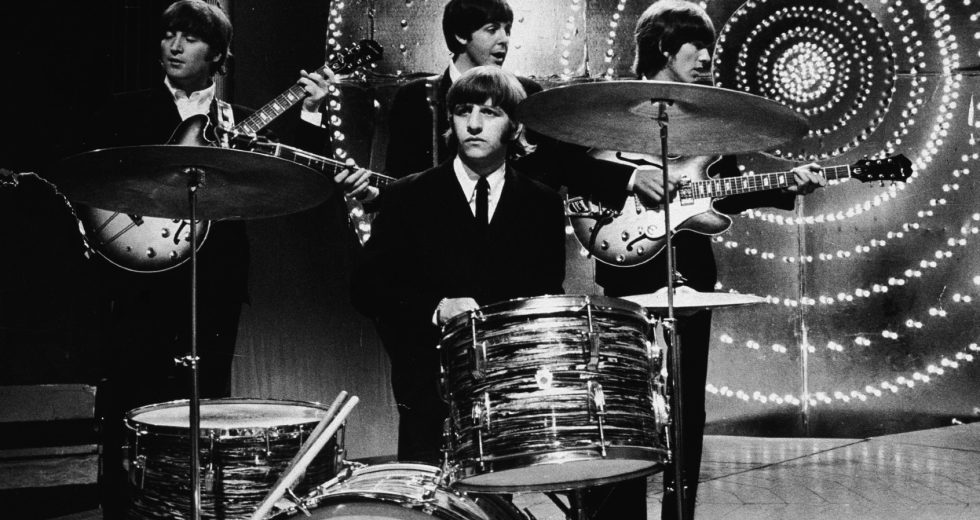
For folks who spend the majority of their waking hours contemplating the music of The Beatles — and there are probably vastly more of us than you might think — “Revolver” (released on August 5, 1966, in the United Kingdom) sure checks a lot of boxes. For one thing, the album’s 14 tracks are a tour de force, a masterpiece of inspired songwriting and musicianship. The LP is also a whirlwind of competing genres in which John Lennon, Paul McCartney, George Harrison and Ringo Starr flex their muscles and prove that they’re at home in virtually any genre.
But when it comes to The Beatles’ unparalleled legacy, “Revolver” finds the bandmates on an unimpeded trajectory towards greatness. Released the previous year, “Rubber Soul” set things into motion — arguably rock’s first cohesive LP. The Beach Boys’ Brian Wilson later recalled being mesmerized by the album, the first record, to his mind, that didn’t have any filler. Just one study in pop-music mastery after another.
In terms of the album’s reception history, “Revolver” has enjoyed a strange odyssey in the United States. For many critics, it served as the tantalizing appetizer before the release of “Sgt. Pepper’s Lonely Hearts Club Band” in 1967, a dazzling entrée if ever there were one.
And for years, “Sgt. Pepper” reigned supreme, routinely topping “best of” lists as the finest album ever recorded. In the decades since the release of The Beatles’ masterworks on compact disc in 1987, when the group’s American LPs were deleted in favor of their canonical UK counterparts, the “Revolver” album has slowly but surely gained momentum — particularly among Stateside listeners, who had no idea what they’d been missing.
As we celebrate “Revolver”’s 60th anniversary, I have come to see the album as The Beatles’ thrilling turning point — in many ways, a continuation of their virtuosic performances on “Rubber Soul.” George Harrison seemed to agree. In later years, he would describe the records as parts one and two of the same album. In one sense, he was selling himself short: “Revolver” featured three Harrison compositions, a glut of new material that included “Taxman,” “Love You To” and “I Want to Tell You.”
Want more from culture than just the latest trend? The Swell highlights art made to last.
Sign up here
Harrison, of course, was by no means alone. Paul McCartney and John Lennon, too, rose fully to the occasion, reeling off such masterworks as “Eleanor Rigby” and “Tomorrow Never Knows,” not to mention a bravura single’s release featuring “Paperback Writer” and “Rain.” All told, The Beatles and their magisterial producer George Martin loosed 16 amazing new songs into the world in August 1966, an incredible bounty, by any measure.
Ultimately, “Revolver” exists as a weigh-station, of sorts. First, it was the culmination of the most profound demographic growth in the history of entertainment. During their early years, the band appealed to a narrow swathe of teens and young adults. But all of that changed with “Yesterday,” which Martin adorned with a string quartet. Not only did “Yesterday” emerge as a chart-topping American hit, but the groundbreaking song also saw the band growing their demographic to include the highly desirable world of working adults, ages 25-54, who longed for something more sophisticated.
And then there was “Revolver”’s “Eleanor Rigby” and “Yellow Submarine.” In one fell swoop, The Beatles penetrated two more demographics. “Eleanor Rigby” attracted a post-55 audience in droves, while the good-natured storyline and nautical sound effects inherent in “Yellow Submarine” drew children and pre-teens into The Beatles’ camp. Quite suddenly — and scarcely more than two years after their triumphant American debut on “The Ed Sullivan Show” — the group dominated nearly every quadrant of the consumer age range.
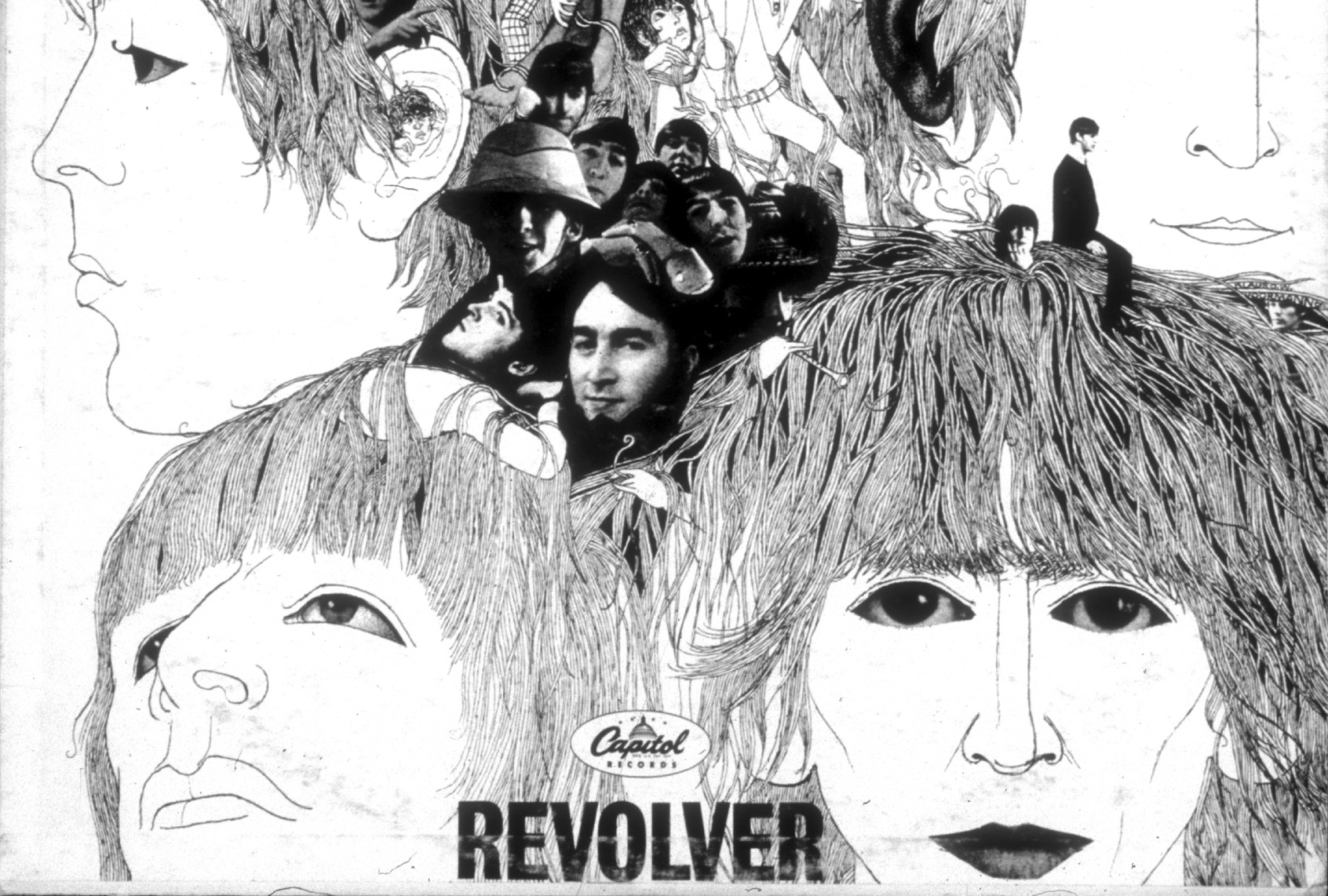
(Michael Ochs Archives/Getty Images) The Beatles’ “Revolver” album cover, designed by artist Klaus Voormann
Yet feats of demography are only part of what “Revolver” bequeathed. The LP served as a runway — or perhaps more accurately, a launching pad — for the more experimental and challenging efforts to follow. There they are, in quick succession: “Sgt. Pepper,” “Magical Mystery Tour” (1967), “The White Album” (1968), the “Get Back” project (1969, released the following year as the “Let It Be” album), and “Abbey Road” (1969).
And then they were gone, leaving a sense of wonder and mystique in their wake that remains unparalleled in the annals of popular music — perhaps even for the whole of Western art. But first, there was “Revolver” — a glittering array of musical chestnuts that we’re only just beginning to appreciate.
This year’s “Everything Fab Four” Fest, taking place November 5-8 at Monmouth University in New Jersey in conjunction with the Bruce Springsteen Center for American Music, will be a celebration of the 60th anniversary of “Revolver.” Please watch for more details and ticket information soon.
Read more
about The Beatles
Source link