To camp with kids makes me question my sanity. I crush tasks. Setting up the tent, laying out the bedding, stacking coolers on a bench. The picnic tables are skeined with leaves after a season of rain. I peel and drape their skeletal outlines over a nurse log. Forest doilies. We brought bikes. Our sons pop wheelies in the parking lot, safer than it sounds because few campers have braved late spring at Seaquest State Park.
On the drive along Spirit Lake Highway to Mount St. Helens, the houses are few and well-priced. I marvel; Brian scoffs. That’s because this whole place was destroyed forty years ago. Having timed our trip to the eruption’s anniversary, we ascend through what had been a trail of devastation. Once seared by lahars, the landscape has greened into a wildlife corridor that winds around the Toutle River.
Scientists didn’t think life would come back this fast. Scant weeks after the blast, fireweed poked its green head through the ash, sending purple flowers skyward by July of 1980. The next year, I was born. We don’t always know where hope resides. I spent four decades guarding a secret. Quietude is a fertile state. Sure, I published hundreds of articles with my byline. But I rarely disclosed my own truths.
To this sunny weekend, I had invited a couple that Brian and I met in Seattle. Like him, they’re from the Midwest. Friendly people. She sang at our wedding with her two sisters, one of whom was our officiant. They moved to Portland a year after we met. We have stayed friends, which says something because I have lost contact with people who live in north Seattle. Together we decide on the Hummocks Trail. It’s only 2.5 miles long. I used to burn for monthlong expeditions, but it’s a good length for short legs.
I had never heard of hummocks before, which is the privilege of choosing one’s encounter with destruction. Hummocks are pieces of the mountain blown off by the eruption and carried downhill by a landslide. By the time we arrived, they had settled into place.
Seeds grow best when given space. To heal from my origin so that I could become myself and a mother, I have accepted estrangement as necessary. My parents are unable to reconcile our facts. They prefer façades. But to remain in relation with falsity is too deep a strain. My narrative belongs to me.
Upon these chunks of rock, ecosystems arise. Beneath the alders, bushy green horsetails wave in the unaccustomed sun. Their bright stalks, notched like bamboo, are topped with long fronds that grow in a feathery circle, like squirrel tails. With more than 300 million years of evolutionary strategy in the making, horsetails are hard to remove when they take root. It doesn’t matter how many times you pull them. I was charmed when they touched down in my garden. There, like here, they grow high enough to tickle my children’s hands along the path.
Our boys throw sticks into the ponds. Called the lifeblood of the hummocks by helpful plaques I read at a gallop to keep the kids in sight, the ponds are more like seeps. Or rainfall catchment basins. They were born when chunks of shattered glacier melted, forming pits filled by water then buried in ash. No longer held together by the mountainside, the hummocks slumped apart. Water dribbled through gray crannies. Now exposed to the sky, the ponds are thick with algae and cattails. Damselflies and dragonflies lay their eggs in the stillness. In springtime, the toad and frog eggs hatch into tadpoles which wriggle through the murk.
The ponds are unstable and evaporate quickly. To survive their home, the creatures must reproduce early and often. By the time I birthed our boys, I was in my thirties and had fortified my self-regard. Each autumn, the frogs and toads bury themselves in the muck to wait for spring. I had no knowledge of such metaphors when I was a girl. But I waited for my season to come.
Want more from culture than just the latest trend? The Swell highlights art made to last.
Sign up here
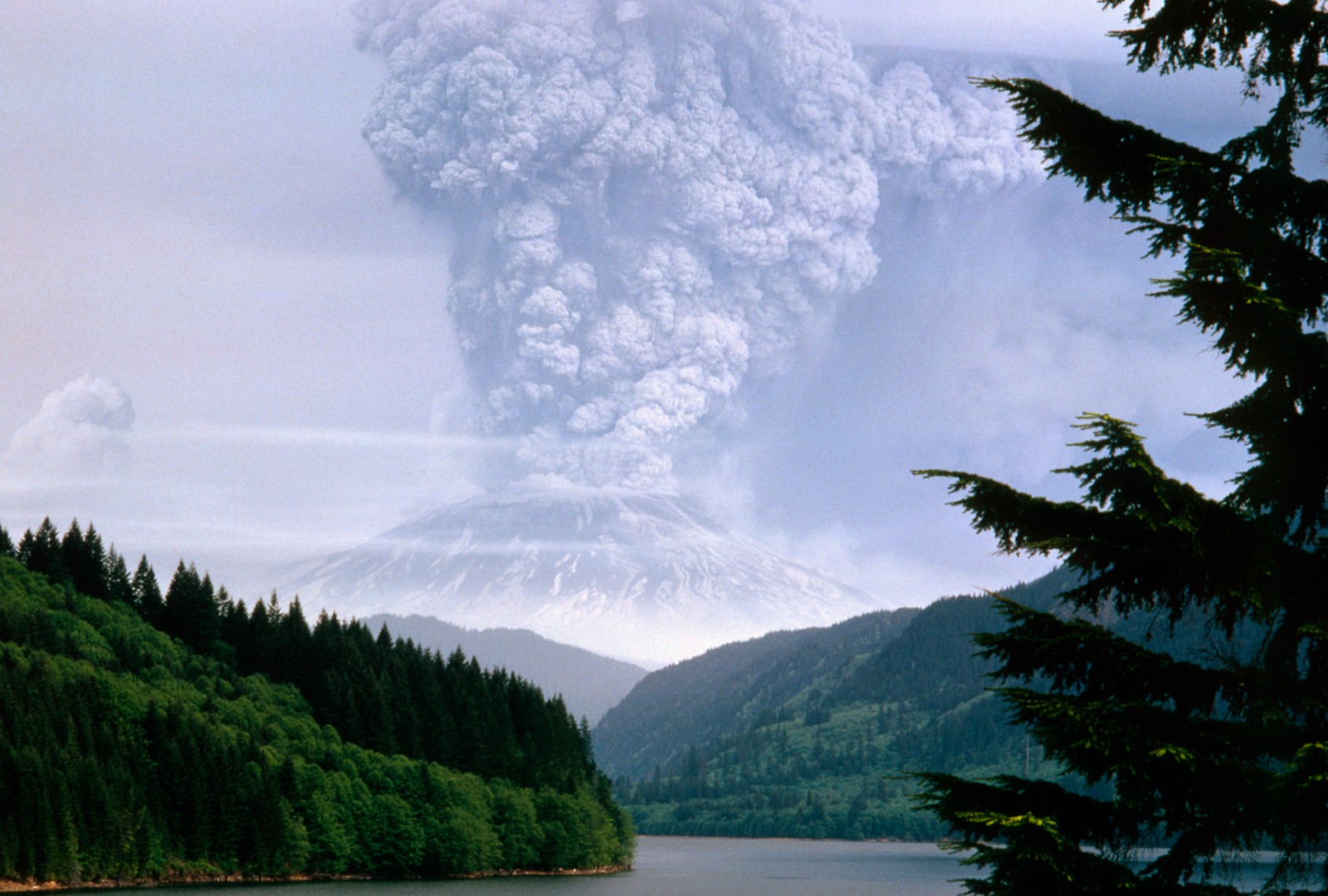
(Steve Terrill/Getty Images) Mount St. Helens erupting
Fireweed has many uses. I can only name a few. Epilobium angustifolium fights inflammation, bacteria and aging, among other properties. What I can say about fireweed — I know what it is to harden in resistance, to become a seed that flowers in adversity. I work to overcome a tendency toward hypervigilance and its attendant crises of critique and anxiety. My husband has a hard time getting me to relax.
He is practiced. I am wary of his wiles. But Brian loves the prickly spine of me. He did not show up just to harvest the blossoms. He takes time to water the roots. He opens channels to the sun. He accepts sudden rains for the blessings they bring. I married an easygoing man. He trusts eventuality. Our sons scamper down the path with their friends, secure in their innocence.
Called Lawetlat’la, Loowit, or Louwala-Clough, which means smoking mountain, Mount St. Helens didn’t remake itself overnight. The eruption began on the same day in March that our eldest was born and that the Attis passion week concludes. Lavatio. A public ceremony that washes the image of the mother goddess, following Hilaria, a time for celebration. Few continue to worship Cybele, if any, but her rituals persist in other guises. Images of the Madonna are promenaded through the streets of Catholic towns throughout Europe and South America. She is showered in petals gathered from the hills, just like in pagan times. Carried in procession, her image is exposed to public view so that she may confer protection upon that community. With sorrowful eyes and an enigmatic smile, she tells them a story about themselves.
Mount St. Helens collapsed in three separate blocks, the first of which hurtled toward where we are hiking. Standing in the sun, passing snacks, it is hard to imagine the ground — which feels solid under my feet — as it had been, spinning down the mountain at up to 155 miles per hour.
A few seconds after the first block slid, the second block broke through, powered by the blast of released pressure and the magma welling from beneath. Before Mount St. Helens erupted, scientists didn’t know how far away to keep onlookers. Geologists thought the volcano would blow its top upward, rather than sideways. The mountain did not perform according to plan. For this and other reasons — some decided to wait it out — fifty-seven people perished that day in May. Decades of subsequent study have shown that the earth held this knowledge for us, but we did not see it.
Scientists had noticed mounds near other volcanoes, but they believed the hills had formed from mudflows or glaciers. But they were, in fact, evidence of catastrophe. In New Zealand 23,000 years ago, Mount Egmont’s debris avalanche traveled 19 miles. Closer to home in California, Mount Shasta’s debris avalanche traveled 30 miles. In 1888 Japan, a debris avalanche traveled 7 miles from Mount Bandai and became a hilly forest that people now call home. Glistening in the sun, the scooped cone of Mount St. Helens’ summit can be seen from these hummocks which came to rest 14 miles from their source. Snowmelt unfurls from the crater like tentacles.
My home in Seattle is 3,093 miles from the island of my youth. It would take forty-six hours to drive that distance, or forty-two days to walk the diagonal across a country which has not always felt great enough to protect me. I hew to my beloved jagged coast. This place helped make me who I am, a woman who carries stories for our descendants. May they know greener times.
Seeds grow best when given space. To heal from my origin so that I could become myself and a mother, I have accepted estrangement as necessary. My parents are unable to reconcile our facts. They prefer façades. But to remain in relation with falsity is too deep a strain. My narrative belongs to me.
When this book is published, I anticipate my birth family will not speak to me again. While the pull toward my parents is real, separation brought relief to my body. Do these hummocks miss their brethren shoved against the valley walls? Their silt and silica trickle downhill together, grain by grain.
While the pull toward my parents is real, separation brought relief to my body. Do these hummocks miss their brethren shoved against the valley walls? Their silt and silica trickle downhill together, grain by grain.
Most entanglements are quantum. The braids of Toutle River are akin to the Missoula Flood patterns, visible from astronomical heights which reveal our land’s history: A mighty ice dam gave way, again and again, to the water it held in abeyance. I have worked hard to pry apart the fractals that have locked my kin into repeating errors at various orders of magnitude. To move forward, I have relinquished the belief that my happiness depends on our unity. They don’t have to show kindness for me to heal. They have their reasons for being puzzles I no longer need to solve. Forgiveness does not imply reconciliation.
Releasing them has freed me to hold space for my own story. My liberation has stoked resentment and dissent. You’re hurting us, they accuse, meaning, You’re hurting our idea of us, and this idea is all that we are. In these pages, I remain in relation to forebears who no longer define my future. Our shared memories make us a family the way rivers carry snowmelt to the sea.
It can be hazardous to leave the path that was planned for you. Here on the hummocks, in full view of the mountain which mothered them, I step off trail and slide down scree that skins my shin into a shining ruby constellation. I don’t bother to shield my legs from the sun. My scars remind me: Forging a desire line can be dangerous. So is failing to follow your hope. When I think of my family now, I look for roots I’ve grown into the earth. Sturdy enough to bear witness, they send signals of welcome to you whose presence I embrace, unseen.
With our communion comes responsibility for what happens next. That, too, is mine to accept, though not control. The route to the goddess unmakes you. Our journey was never meant to be linear. Find the whole in the fragments.
Dusk cloaks the grove around our tents. A cinder cone rebuilds herself on a horizon I cannot see. Here I feel safe to revel in the gloaming. Evenings are ceremonial for parents. We remain open to the world in defiance of routines which structure our days. Rituals are made through repetition. We feed our children and tell stories. Not much remains to be done. In the forest, there is no bathing, except in beauty.
Our kids stay up. The campfire warms their small faces. Wet wipes provide the semblance of clean hands after s’mores. The fathers are tasked with bedtime. With kisses good night, my sons step into our tent. My husband zips up the door. From the fire circle, I hear their murmurs and laughter amidst the slight rustle of sleeping bags. My friend smiles, her eyes agleam with patient hope. She is ready for our song time. The night stills but for the crackles of sap. We sip from metal cups, our sparks spiraling toward the stars.
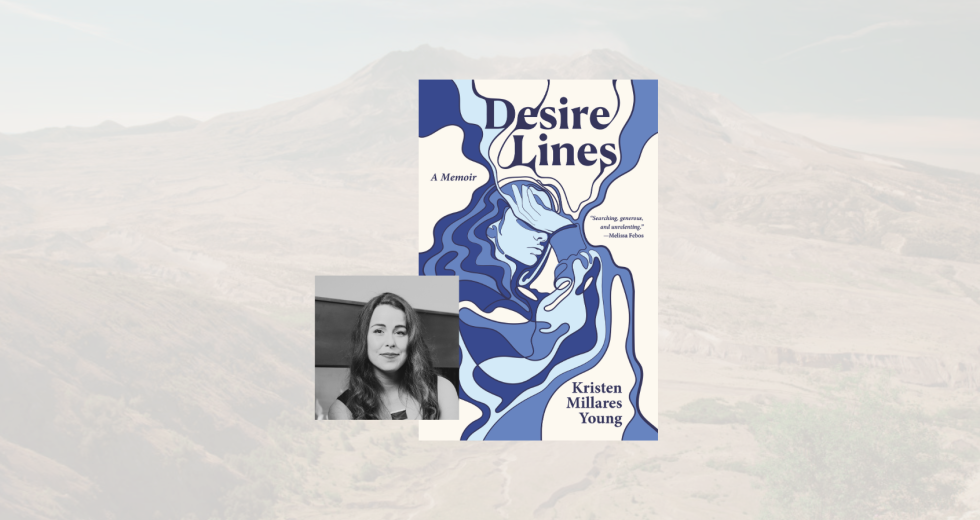
“Desire Lines” is available in print from Red Hen Press or as an audiobook narrated by the author, who is currently on a book tour.
Read more
moving and thought-provoking book excerpts
Source link